Climb vs conventional milling#
The spindle always turns the same way: clockwise, seen from above. What changes is which side of the bit the wood is on as it moves. That decides how each tooth takes its chip.
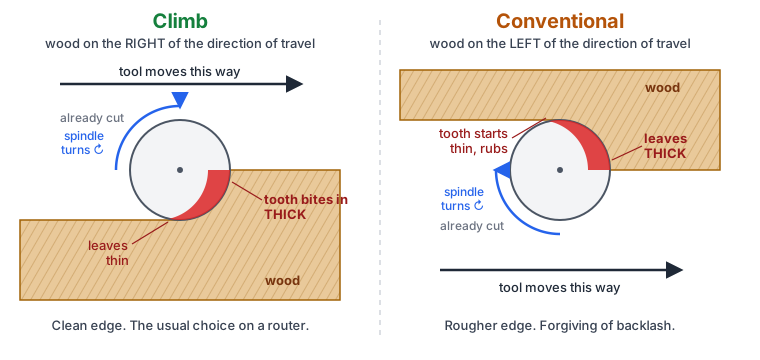
Top view. The red crescent is one tooth's chip.
| Climb | Conventional | |
|---|---|---|
| Wood is on the | Right of the direction of travel | Left of the direction of travel |
| Chip | Starts thick, ends thin | Starts thin, ends thick |
| Edge finish | Cleaner | Rougher (the tooth rubs before it bites) |
| Pushes the bit | Away from the work | Into the work |
| Needs | A machine without much backlash | Tolerates backlash |
Which to use#
Climb is the normal choice on a router in wood. It gives a cleaner edge.
Use conventional if:
- Your machine has backlash it can't take up (the bit gets pulled into the cut).
- The material tears out where the cut starts.
You don't have to work out the direction#
Pick climb or conventional in the operation's Direction field. The app then runs the tool the right way round for you: round a part's outline, inside a hole, or across a pocket.